Common Mistakes
Many reasoning errors come from misusing one part of Bayes theorem or silently skipping it.
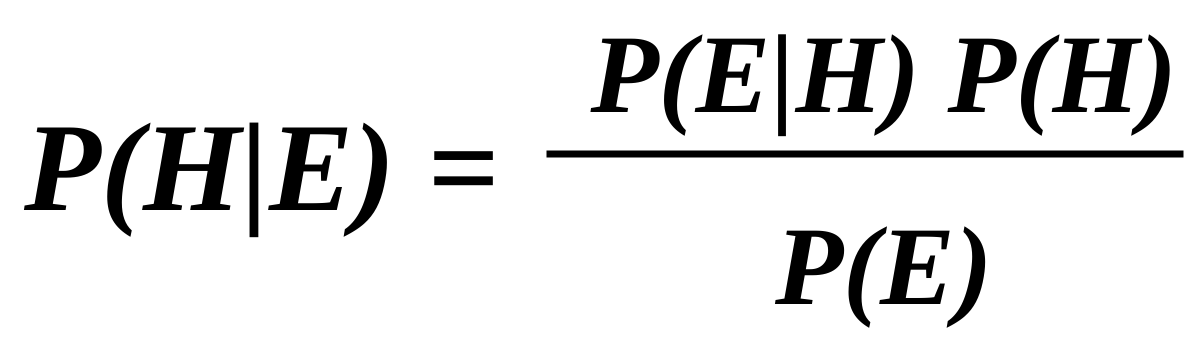
H is the hypothesis: the possible explanation you are checking. E is the evidence: the clue or observation you just noticed. Read the formula as: updated confidence in H after seeing E equals how well E fits H, times your starting confidence in H, adjusted by how common E is overall.
Ignoring the Prior
People often treat a new fact as if it starts the whole inquiry from zero. This makes vivid evidence too powerful. A rare claim usually needs stronger evidence than a common claim.
The repair is to ask for the base rate or background expectation before reacting to the new evidence.
Confusing Likelihood With Posterior
A common mistake is saying, “This evidence would fit my theory, so my theory is probably true.” That skips the question of whether the evidence also fits rival theories.
The repair is to ask: would this evidence be much less expected if my theory were false?
Forgetting the Evidence Term
If evidence is easy to produce under many explanations, it may not strongly support any one explanation. Anecdotes, rumors, and vague predictions often fail here.
The repair is to compare alternatives before assigning confidence.
Updating Too Much or Too Little
Fear, hope, identity, and social pressure can cause over-updating or under-updating. A person may leap to certainty from one weak study, or refuse to move after a strong body of evidence.
The repair is calibration: ask whether the size of the confidence shift matches the strength of the evidence.