Scientific Walkthrough
Scientists use Bayesian thinking to compare hypotheses, update confidence, and avoid being fooled by isolated evidence.
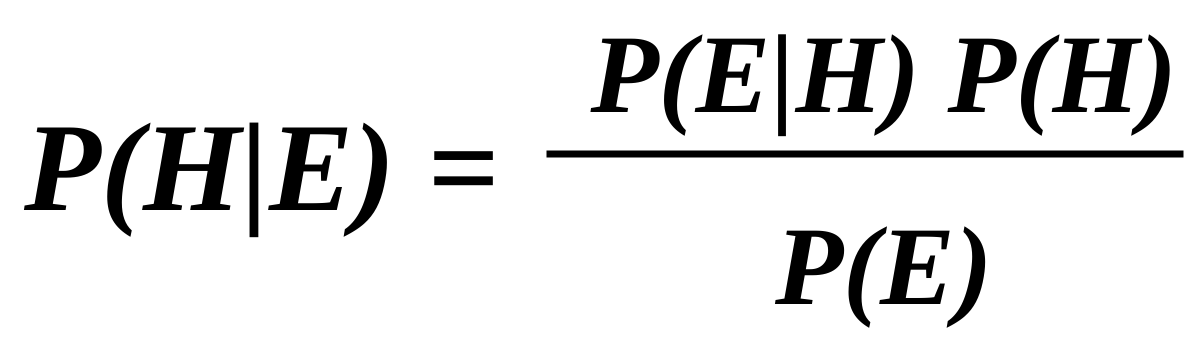
H is the hypothesis: the possible explanation you are checking. E is the evidence: the clue or observation you just noticed. Read the formula as: updated confidence in H after seeing E equals how well E fits H, times your starting confidence in H, adjusted by how common E is overall.
A Research Example
Suppose researchers are testing whether a new treatment helps a condition. The prior comes from previous studies, biological plausibility, and what similar treatments have done. The evidence comes from a new trial.
The likelihood asks whether the trial result is expected if the treatment works. The evidence term asks whether the same result could also appear because of chance, bias, small sample size, selective reporting, or a placebo effect.
The Scientist’s Mental Sequence
First, set the starting expectation: what did we believe before this study? Second, inspect the evidence: how strong, clean, and expected is the result? Third, compare alternatives: could the result be explained without the hypothesis? Fourth, update confidence by an amount proportional to the evidence.
A careful scientist does not ask only whether a result is exciting. They ask whether it should change the field’s confidence, and by how much.
Connection to Credencing
This is Deep Rationality in action. The scientist is trying to reduce the gap between Objective Evidence (E0) and Perceived Evidence (EP).
But the institution also needs Core Rationality. Researchers, journals, companies, and universities must be willing to assign confidence according to the evidence, even when the result threatens funding, prestige, or a favored theory.