The Prior
The prior is the confidence you assign before the new evidence is added.
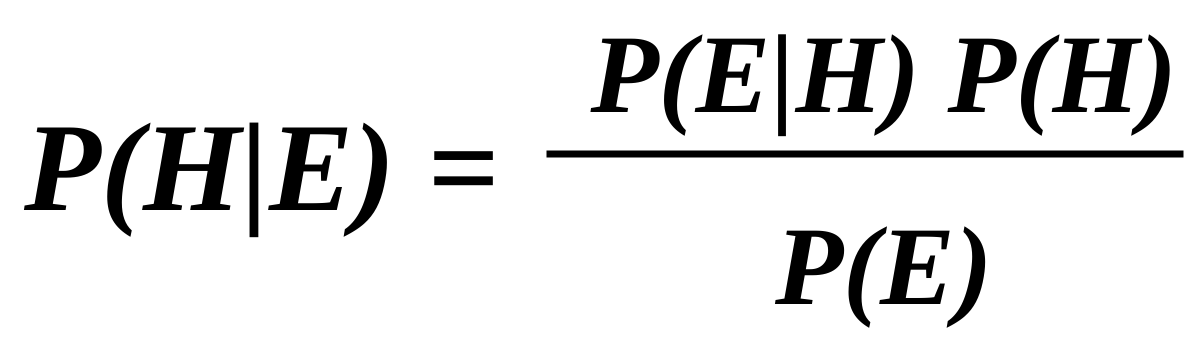
H is the hypothesis: the possible explanation you are checking. E is the evidence: the clue or observation you just noticed. Read the formula as: updated confidence in H after seeing E equals how well E fits H, times your starting confidence in H, adjusted by how common E is overall.
What the Prior Does
A prior is your starting credence in a hypothesis before the new evidence is taken into account. It may come from base rates, previous studies, background theory, experience, or a deliberately cautious default.
A prior is not a prejudice in the bad sense. It is a way of admitting that evidence does not arrive in a vacuum. Some claims begin as common, some as rare, and some as extraordinary.
How Scientists Use Priors
A scientist may begin with background theory and past research. If a new drug is similar to many failed drugs, the starting confidence may be modest. If it is based on a well-supported mechanism, the starting confidence may be higher.
Good scientists do not make priors invisible. They ask whether the starting assumptions are justified, whether they are too confident, and whether the evidence is strong enough to move them.
Mental Walk-Through
Before reacting to new evidence, pause and ask: how common is this kind of thing? What do I already know? What would a reasonable person have believed before seeing this particular report?
This pause protects you from being captured by the newest, loudest, or most emotionally vivid evidence.
Adjacent References
These are starting points rather than exhaustive citations. They connect this page to nearby work in probability, calibration, cognitive bias, and social epistemology.
- |Thomas Bayes, "An Essay towards solving a Problem in the Doctrine of Chances" (1763).
- |E. T. Jaynes, Probability Theory: The Logic of Science (2003).