Practice Examples
Practice examples help readers mentally rehearse Bayes theorem without needing advanced mathematics.
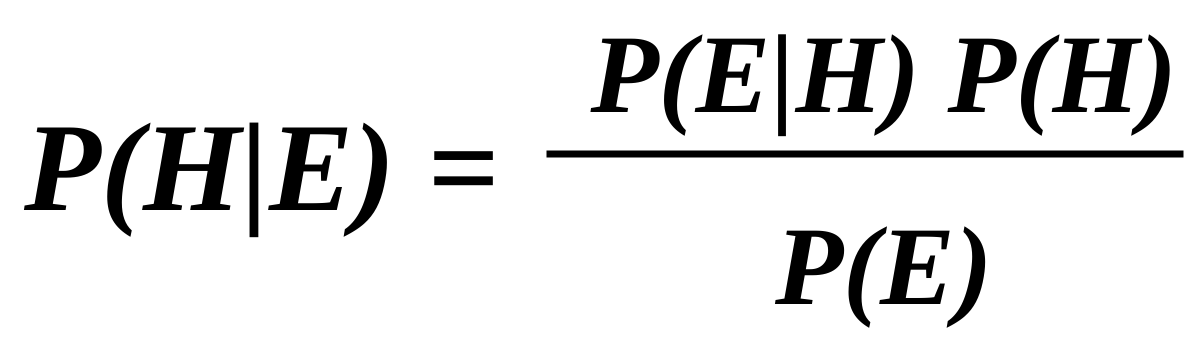
H is the hypothesis: the possible explanation you are checking. E is the evidence: the clue or observation you just noticed. Read the formula as: updated confidence in H after seeing E equals how well E fits H, times your starting confidence in H, adjusted by how common E is overall.
Example 1: The Medical Test
A test result comes back positive. Before jumping to certainty, ask: how common is the condition, how accurate is the test, and how often does this test produce false positives?
The prior is the base rate of the condition. The likelihood is the chance of a positive test if the condition is present. The evidence term includes positive tests from both true cases and false positives. The posterior is the updated chance the patient has the condition after the result.
Example 2: The News Report
A breaking news report claims an official has resigned. Ask: how plausible was this before the report, how reliable is the source, and how often do early reports of this kind turn out wrong?
A reliable source with documents should move confidence more than an anonymous viral post. A cautious reader updates, but leaves room for correction.
Example 3: The Scientific Claim
A new study reports that a supplement improves memory. Ask: what did previous research show, how large was the sample, was the study preregistered, was there a control group, and have other labs replicated it?
The posterior after one study may be only modestly higher. Strong confidence usually requires converging evidence, not one dramatic result.
Practice Template
For any claim, write four lines: Prior: what should I believe before this evidence? Likelihood: how expected is this evidence if the claim is true? Alternatives: how expected is it if the claim is false or another explanation is true? Posterior: where should my confidence now be?
Then add the Credencing question: am I actually assigning that confidence, or am I being pulled away from it by fear, loyalty, desire, or social pressure?