The Likelihood
The likelihood asks how expected the evidence would be if a hypothesis were true.
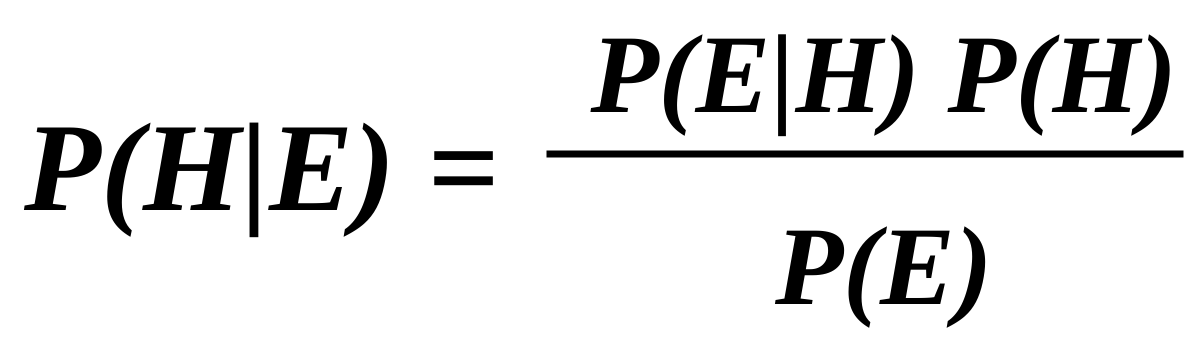
H is the hypothesis: the possible explanation you are checking. E is the evidence: the clue or observation you just noticed. Read the formula as: updated confidence in H after seeing E equals how well E fits H, times your starting confidence in H, adjusted by how common E is overall.
The Likelihood Question
The likelihood is not the probability that the hypothesis is true. It is the probability of seeing this evidence if the hypothesis were true.
That distinction is crucial. People often confuse “this evidence fits my theory” with “my theory is probably true.” Bayes asks a sharper question: would this evidence be much more expected if my theory were true than if it were false?
How Practitioners Use It
A scientist asks whether an observation is what the theory predicted, whether rival theories predicted it too, and whether the measurement could be noise. A doctor asks whether a symptom is common under one condition but rare under another.
A historian asks whether a document, action, or pattern would be expected if one explanation were true, and whether it would also be expected under rival explanations.
Mental Walk-Through
Imagine the hypothesis is true. Would this evidence surprise you? Now imagine the hypothesis is false. Would the evidence still be easy to explain?
Evidence becomes powerful when it is expected under one explanation and surprising under alternatives.
Adjacent References
These are starting points rather than exhaustive citations. They connect this page to nearby work in probability, calibration, cognitive bias, and social epistemology.
- |Thomas Bayes, "An Essay towards solving a Problem in the Doctrine of Chances" (1763).
- |E. T. Jaynes, Probability Theory: The Logic of Science (2003).